

Current Obsessions
March 7, 2026

This week I’ve been consumed with the war in Iran. It’s hard for me to concentrate on anything else, and that’s not only because I closely follow foreign policy and worked for 12 years at the U.S. Department of State. When my taxpayer dollars are going to a military intervention that in its first few days cost over $1 billion and by some estimates far more, you have my attention. This is especially true because I can’t get a handle on what the U.S.’s objectives are in Iran. Already the administration has offered the following justifications at various times: self-defense, imminent threat, revenge for an assassination attempt, failed negotiations, U.S. election interference, Israeli pressure, the protection of Iranian human rights and regime change.
This is alarming, Georgetown University Professor Daniel Byman told a group of students and alumni this week, because each of these ambitious objectives requires a different strategy. That the president is now insisting on “unconditional surrender” only serves to complicate this poorly-defined mission.
What also shocked me this week was how drawing down U.S. embassies and consulates and evacuating Americans and other foreign nationals living in the Middle East was treated as an afterthought. When the United States invaded Iraq in 2003, I was working at the U.S. Embassy in Islamabad, Pakistan. We knew that the operation would be unpopular with Pakistanis and that there was a risk of violence targeted at Americans. Washington told the Embassy to reduce its footprint, leaving a skeleton staff at post. By my recollection, we were given a couple of weeks notice that this drawdown was coming. That gave us enough time to pack, book travel and organize accommodations. Although there were few Americans in the region, we informed those who had registered with the Embassy or with one of our consulates around Pakistan of the heightened security threat and urged them to leave the country.
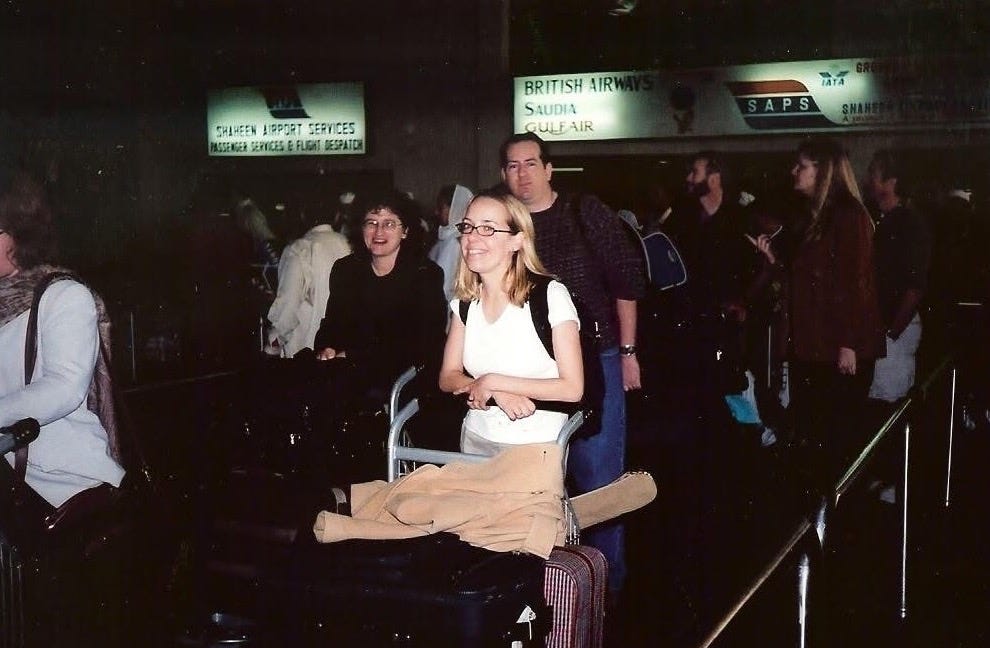
Just as in 2003, Americans were targeted immediately following the start of the U.S.-Israeli campaign. Violent clashes in Karachi, Pakistan, left 22 Pakistanis dead and 120 injured when demonstrators supportive of the Iranian government tried to storm the U.S. Consulate on March 1. On March 2, a drone attack started a small fire at Embassy Riyadh, and yet at this time the State Department was providing American citizens with only basic information on an automated hotline about security concerns. (The Consular Affairs hotline instructed callers not to “rely on the U.S. government for assisted departure or evacuation.”) It was not until March 4 that the State Department ordered the departure of non-essential personnel posted to the Middle East. That is also when the Department began evacuating Americans by charter flights and buses. Understandably, State has garnered harsh criticism for stranding U.S. citizens and its diplomats abroad.
For any expatriate, preparing for an evacuation requires hours of planning: notifying employers, pulling children out of school, filling or transferring prescriptions, finding care for pets. Flight cancellations and airspace closure create additional hurdles. In this case, evacuation efforts were further hindered by the fact that many of these embassies have been critically short staffed for months, thanks to the administration’s reductions in force.
Americans are supposed to have robust debates about the value of money and the lives lost in combat. The U.S. government has an obligation to warn its citizens of imminent danger. U.S. forces have been amassing a military presence in the Middle East for months, which means the State Department had ample time to inform and assist Americans. It’s unacceptable for diplomats and American citizens to be put at risk by their own government. It’s now up to Americans to express our outrage and pressure our elected officials to demand full transparency and a swift end to this conflict.
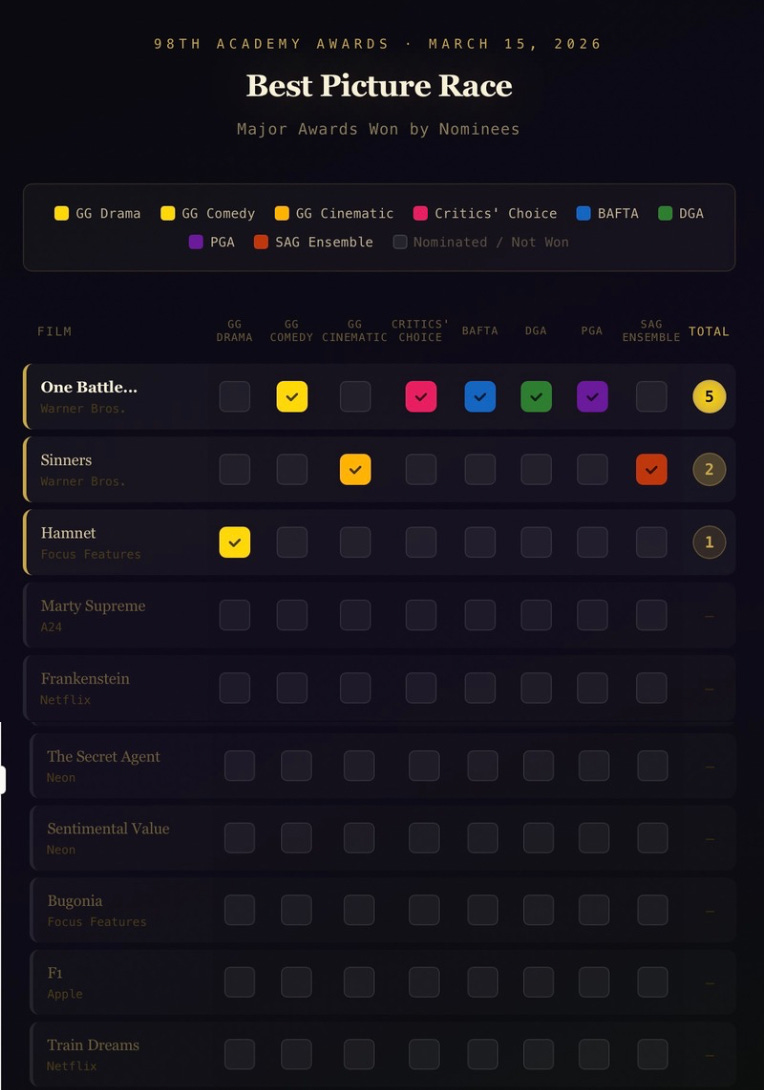
The Oscars are my Super Bowl. Each year I try to see as many nominated performances and Best Picture nominees as possible. As I prepare my ballot, I wanted to see which film has the most buzz going into the Best Picture race based on the wins it has already racked up this awards season, so I used AI to create the chart above. As we approach the March 15th broadcast, it looks to be a two-way race between One Battle After Another and Sinners
In case you were wondering, the Best Picture category is voted on by all of the eligible voting members of the Academy of Motion Picture Arts and Sciences, which consists of over 10,000 industry professionals. While the 17 branches of the Academy (actors, directors, editors, etc…) nominate within their specialty, the entire membership votes on the winner using a ranked choice ballot system. If a film secures over 50% of first place votes, it wins. If not, the film with the fewest votes is eliminated, and its votes are redistributed based on the second choice, continuing until a film achieves the majority. This process supposedly ensures that the winner is the most widely liked production. Currently, I’m giving the edge to Paul Thomas Anderson’s One Battle, but I wouldn’t be surprised if Ryan Coogler’s Sinners pulls off a bit of an upset.
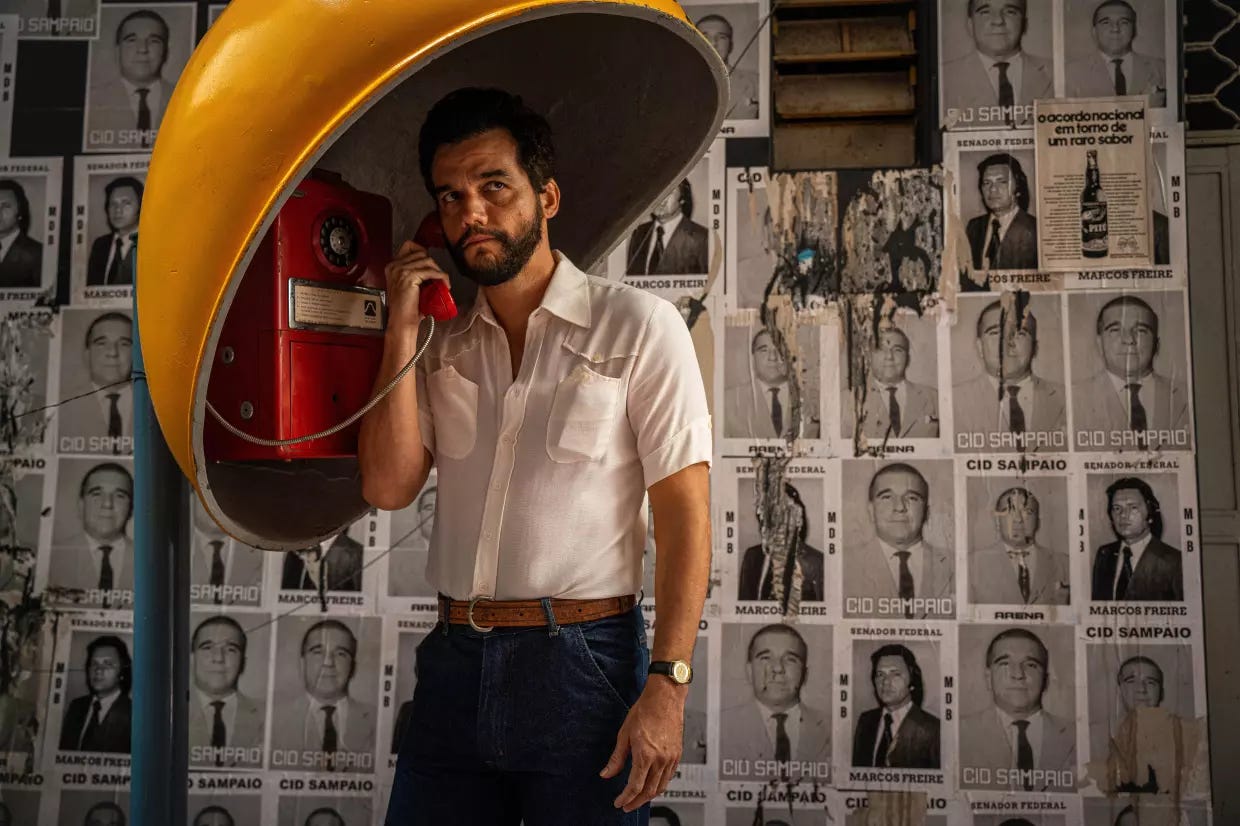
Personally, I think the most compelling Best Picture contenders this year are the international features. I’ve already expressed my admiration for Sentimental Value and It Was Just an Accident, and now I want to encourage you to see Brazilian film The Secret Agent (streaming on Hulu).
Nominated for four Oscars, The Secret Agent is set in 1977 Brazil during the military dictatorship. It follows Marcelo (a superb Wagner Moura), a former university professor on the run, who tries to reunite with his young son during Carnival. Marcelo finds refuge in the Recife home of Dona Sebastiana (Tânia Maria), who provides shelter to a colorful group of characters. Realizing he’s in danger, Marcelo decides to flee Brazil with his son, but first he needs to complete a deeply personal mission.
Before watching The Secret Agent, you’ll want to brush up on Brazil’s recent political history. Even with some familiarity, (perhaps you saw 2025’s I’m Still Here), it wasn’t until I was one hour and 19 minutes in that the film began to make sense to me. A lot of that is deliberate— director Kleber Mendonça Filho playfully misleads the audience (helpful hint— the film is not about a secret agent!). And with a 161-minute run time, I concede this approach is demanding on viewers. But I ultimately fell in love with the film, which is somehow a political thriller AND a satire with a bit of absurdist fantasy tossed in. I also appreciated that The Secret Agent was shot with vintage camera equipment in Cinemascope, and that Mendonça Filho’s visually stunning recreation of 1970s Brazil is packed with authentic details (furniture, haircuts, cars, knickknacks on shelves). I expect The Secret Agent to take home the Best International Feature statue at the Oscars. It speaks to authoritarianism, memory and resistance in ways that resonate well beyond Brazil.

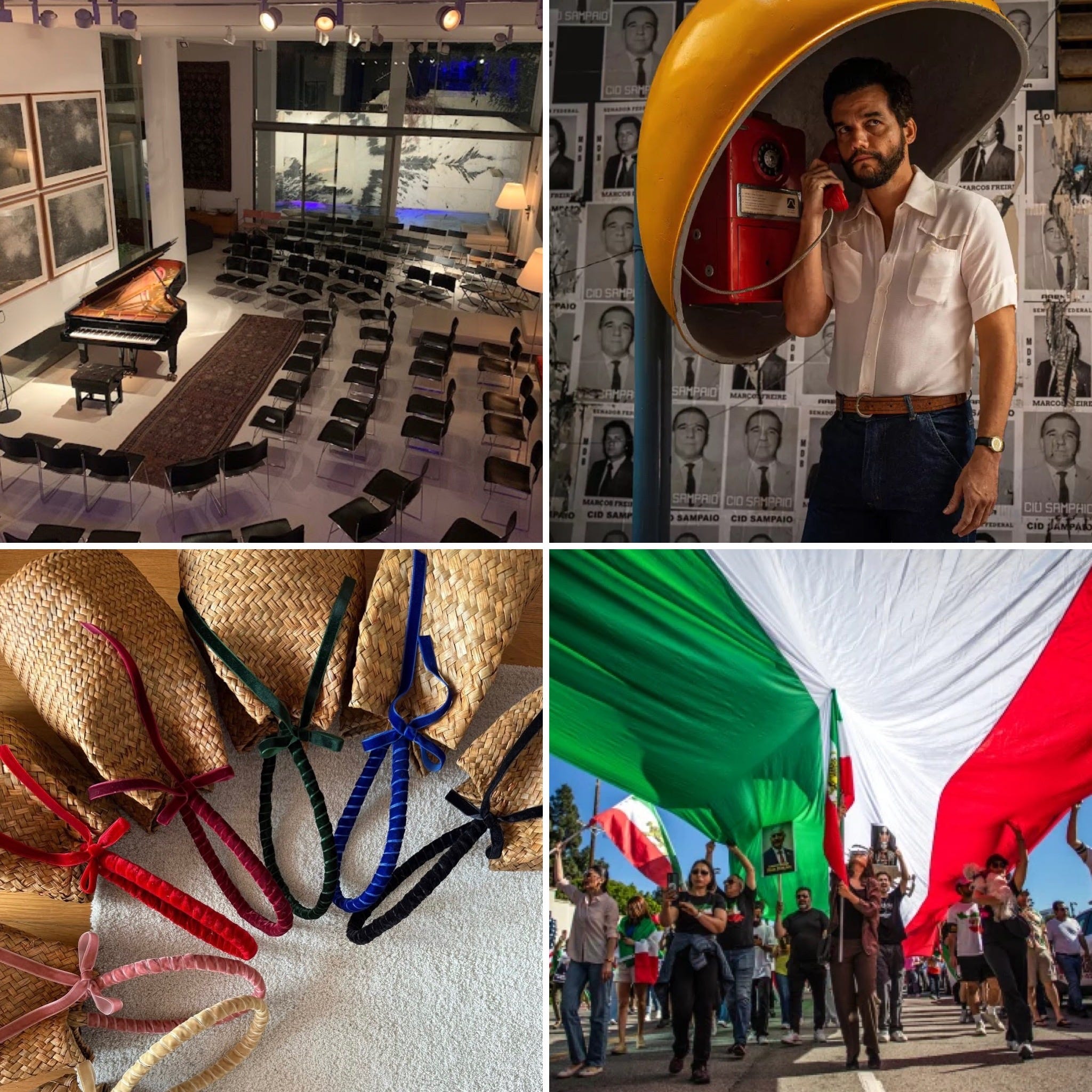
Salzburg, Verbier and Tanglewood may not get the same publicity as Coachella or Stagecoach, but spring means the beginning of the classical music festival season. There is something magical about listening to a symphony or a chamber orchestra perform outside on a warm night. If you are headed to Europe this spring, the International Pharos Chamber Music Festival in Cyprus absolutely needs to be on your radar. This year the festival will celebrate its 25th anniversary. Since its conception, the festival has established itself as one of the most important annual classical music events in Europe and has elevated Cyprus’s standing on the global artistic stage. The Pharos Foundation attracts an impressive lineup of internationally acclaimed musicians and musical ensembles year round. It also carries out a noble educational mission, in which Cypriot young people have the opportunity to participate in lectures, workshops, concerts and master classes. This is in addition to its highly sought after Residency Programme that brings artists, musicians and writers to the Mediterranean island to create new works and a contemporary music festival.
Festival performances will be held from May 29-31 and June 2-4 in the Royal Manor House of Kouklia, a UNESCO World Heritage Site. The structure, which is one of the finest surviving monuments of Frankish (13th century) architecture in Cyprus, is transformed into an intimate chamber music hall for the festival. The celebrations will conclude on June 6 at the Pharos Arts Foundation’s open-air venue, the Olive Grove in Delikipos, with the Cyprus Youth Orchestra and the Cyprus Symphony Orchestra performing with two soloists from the festival. I can’t think of a better way to usher in spring.

I love sharing small businesses that don’t necessarily have a large social media following but are creating beautiful pieces. I recently discovered Mini P, which makes adorable straw handbags with customized handles. The bucket bags are woven in India before Italian-based designer Alessia Montefusco adds her personal touch. After working in the fashion industry in Milan for 15 years, Montefusco was encouraged by friends to start her own fashion line. Inspired by the versatility of a “simple raffia bag,” Montefusco launched Mini P in October 2025. Determined to make a warm weather staple into a year round accessory, Montefusco decided to cover the handles in velvet. In fact, customers can choose to have their bag’s handles wrapped in velvet, gingham and my personal favorite, bandana (my bandana obsession is well documented) and in a variety of colors. You can follow Montefusco’s work— she hopes to expand the collection soon— on Instagram (minip_collection). Mini P ships worldwide, and you can order by messaging her on Instagram. A bag shipped to the United States is 89 Euros, including shipping.

Quick Hits
The BBC compiled the six most anticipated museum openings in 2026. Whether you are a fan of George Lucas’s films or a connoisseur of ancient Islamic Culture, there is something for everyone. The museums also represent exciting architectural achievements, such as the new Frank Gehry-designed Guggenheim Abu Dhabi and the birdlike Larrakia Cultural Center in Darwin Australia (Rossi Architects). I was struck by the transformation of a former Citroen auto-assembly plant in Brussels into what will become Europe's newest outpost of modern and contemporary art, the Kanal-Pompidou.
Wirecutter reviewed potato chips recently— including fancy European brands. Finally, critical, time-sensitive news with real-life implications. If you are as big of a fan of plain, salty chips as I am, grab the champagne and caviar and dip in.
My friend Claire gave me a heads up about Better at Home: Recipes for Big Nights In, a gorgeous new cook book from Food & Wine and New York Times contributor Colu Henry. Based on the premise that most meals are better at home, the recipes promise to be perfect for entertaining and also approachable for everyday cooking. I’m looking forward to trying Henry’s Fizzy Negroni Pompelmos, Italian Shrimp Toast and Calabrian Chili.
For my Raleigh-based subscribers, be on the lookout for the June opening of Songbird, “an intimate bar that moves with the day.” Expect fresh juices, coffee and smoothies in the morning and evenings enhanced by natural wines, handmade cocktails and shareable plates. Sounds like the perfect addition to our dining scene!
Xoxo, Emily
I will never forget the morning of the evacuation of employees from AmEmbassy Islamabad in March 2003. Those who were staying gathered in front of the embassy to say goodbye and hurry back and give final hugs to the evacuees. It was a sad and somewhat scary scene. I was also in the Ops Center when Cairo, my new assignment, evacuated over 800 employees and family members due to the Arab Spring civil unrest. Which makes it so concerning that the current evacuations have been delayed far too long. Thanks for another insightful post.