

Current Obsessions
July 29, 2025

I am still on the road this week. My husband and I just wrapped up our 10 days in Copenhagen and Stockholm. I will be writing Curated Vacation guides on our favorite finds soon, but in the meantime, if you need trip planning suggestions, I have saved my photos to my Instagram highlights as Scandi Summer (I, II and III). Now that we know our way around two Scandinavian capitals, I’m already looking forward to returning one day to spend more time in the beautiful countryside. I’m envisioning relaxing at a brick red, barn-shaped farmhouse surrounded by spruce and pine with a view of the water. As global warming continues to heat up our beloved (and crowded) beach resorts, I predict a quiet Scandinavian summer with its sunny days and pristine, chilly water will grow in popularity.
I’m writing this Substack from NYC’s Upper East Side. I’ve gotten my fill of meatballs and Skagen toast, but I’m not ready to unpack my suitcase just yet. Here’s what I’m Currently Obsessed with
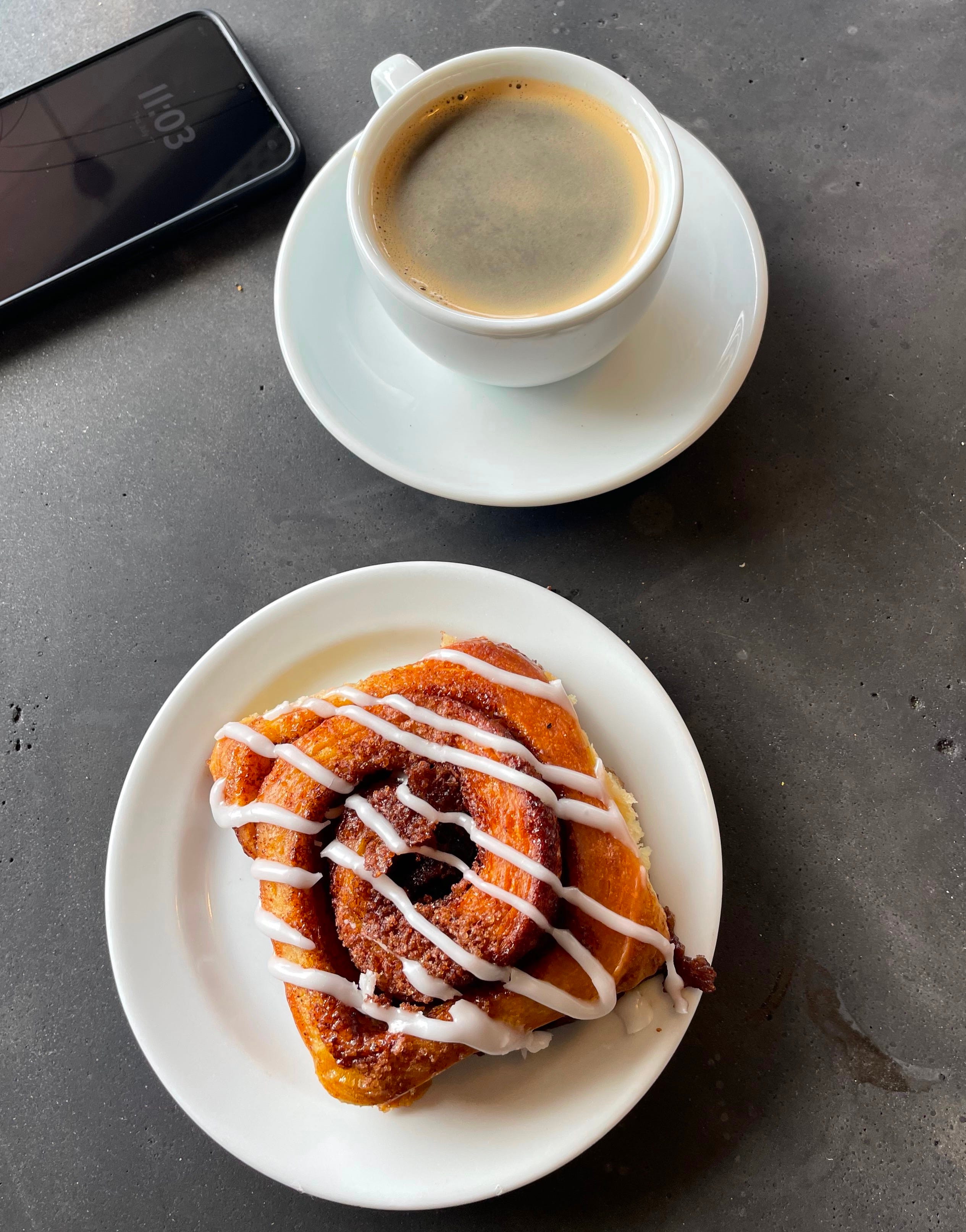
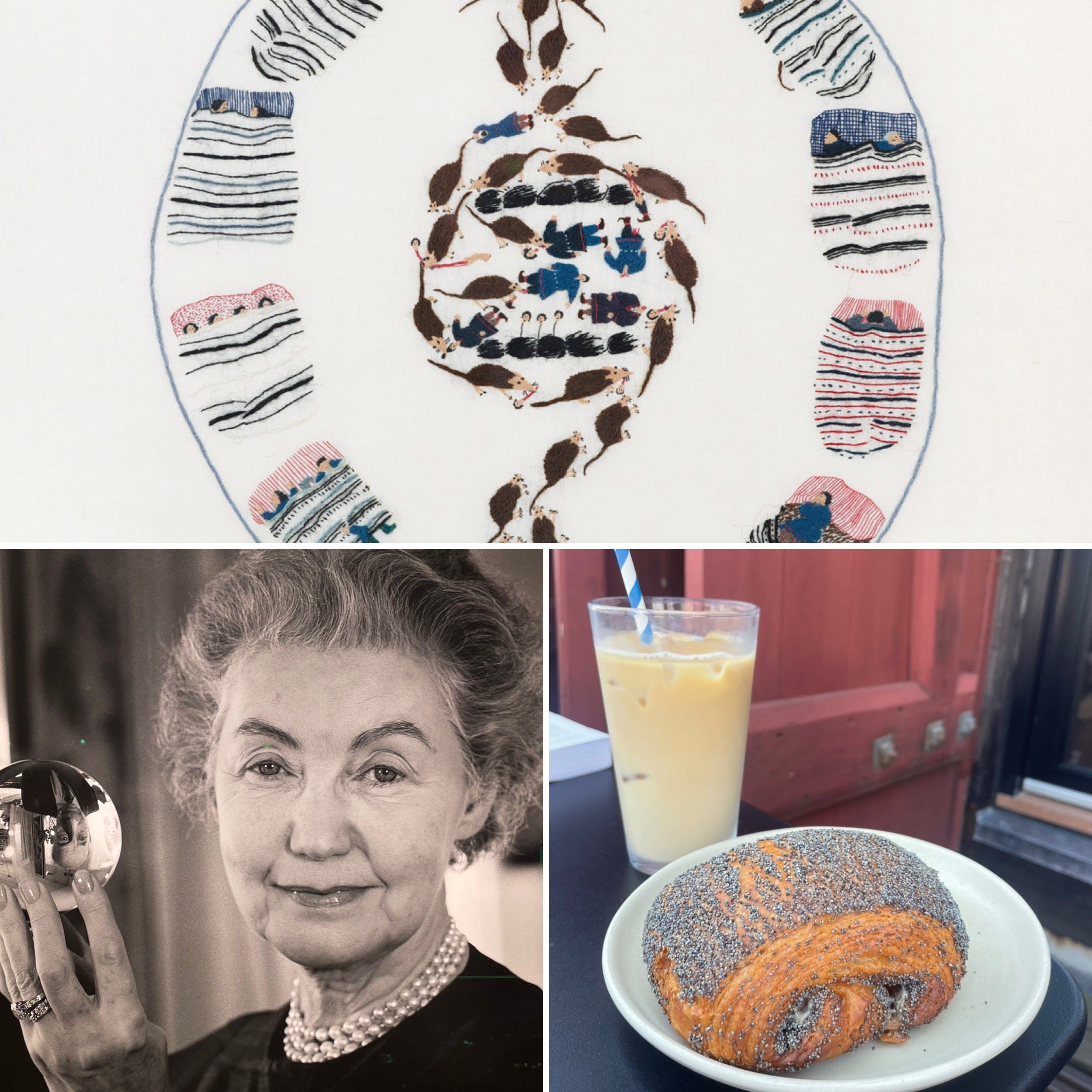
No takeaway cups of joe; Americans need more coffee breaks.
When Kevin and I began planning our summer getaway, he imposed one restriction: I was not allowed to create a detailed schedule. I scoffed at this. Amongst my friends and family, I am known for my painstakingly researched itineraries. It’s one of the benefits of traveling with me: your own private tour guide who’s happily done all the work. I scour the Internet for the latest restaurant reviews, gallery openings, concert listings. I group attractions and shopping by neighborhood and then ensure that we eat at one of the aforementioned restaurants nearby. I pride myself in not retracing steps or wasting time. I’m also a big believer that in the world’s major cities, often the best day is one spent soaking up the atmosphere at a cafe, not rushing from museum to museum. Nevertheless, Kevin didn’t fully trust me and made me promise not to hold us to an actual timetable. So for our Scandi Summer, I limited myself to researching but not scheduling. I’m pleased to report this approach turned out just fine. I could credit my husband or myself, but instead I will give the glory to the fine Swedish tradition of fika.
Fika (pronounced fye kuh) is essentially a break for coffee and socializing, and it is an essential part of daily life in Sweden and Denmark. (Although in Denmark it isn’t called fika and Danes may incorporate their concept of hygge into their daily pauses.) Fika is often accompanied by a sweet treat— a cinnamon danish or cardamom bun in the morning and maybe a slice of homemade cake in the afternoon. In both Copenhagen and Stockholm, we noticed people taking a break from their days to enjoy a cup of coffee or tea. Naturally, some coffee sippers were working on a laptop or scrolling on their phone, but more often than not, we saw people relaxing with friends or family and enjoying conversation. It certainly helps that there are cafes with inviting sidewalk tables spread throughout the cities. Similarly, every single gallery or museum we visited featured an attractive bistro with an expensive Italian espresso machine and a pastry case full of tempting baked goods. Often these coffee shops were located on the top floor or on the rooftop with views for miles. Clearly, the intention was to pause and stay awhile. Of course, most cafes and bakeries offer a lidded, paper takeaway cup for those on the go, but that approach flies in the face of fika. It did not take Kevin and I long to catch on. Each day, usually after our first garden or museum visit, one of us would turn to the other and ask, “Shall we fika after this?”
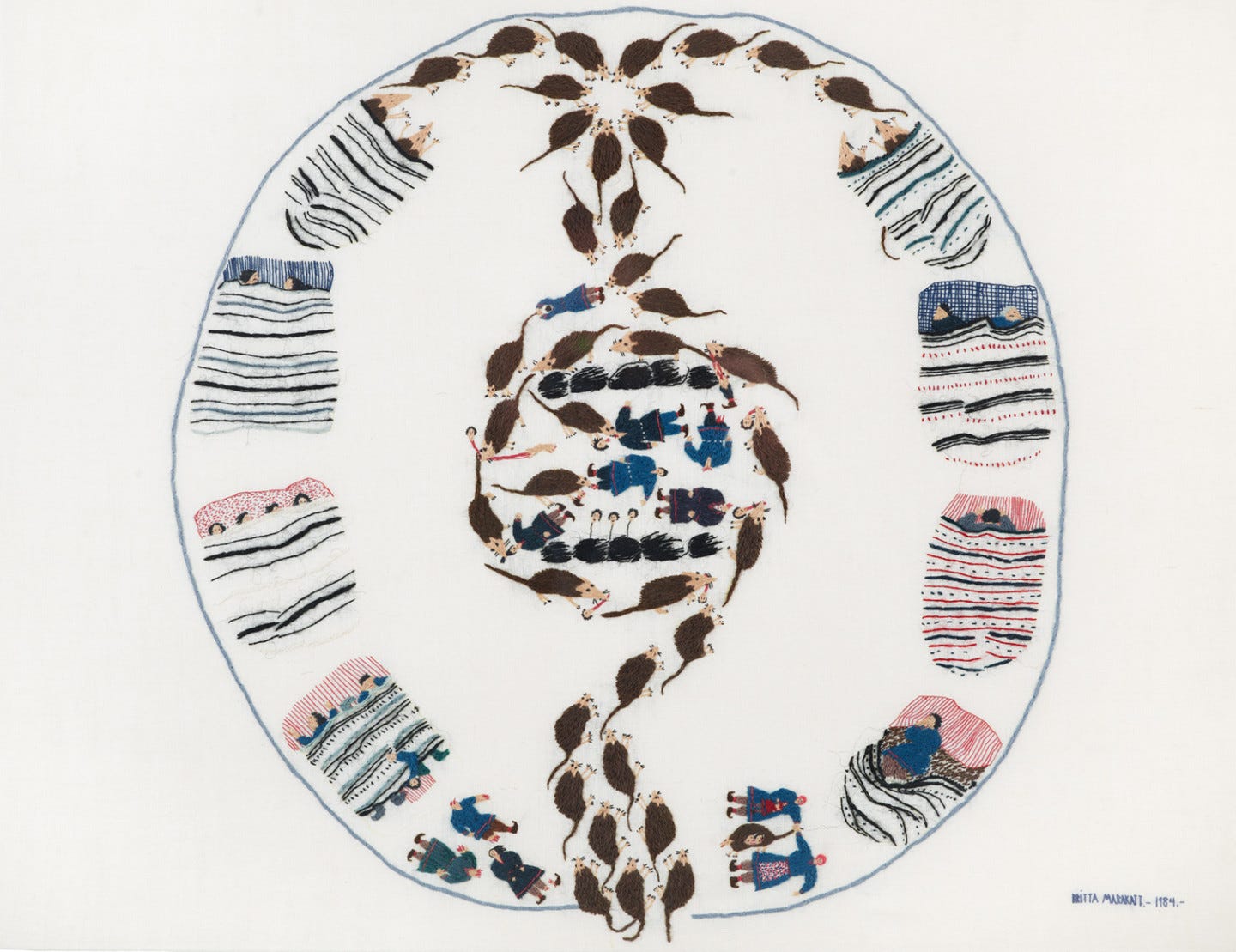
Nightmare by Britta Marakatt-Labba
It was during one such fika at the lovely Cafe Blom, in the courtyard of the Moderena Museet on Stockholm’s island of Scheppholmen, that I discovered my next obsession. The modern art museum was featuring an exhibit called Where Each Stitch Breathes by Swedish textile artist Britta Marakatt-Labba. Marakatt-Labba was born into a reindeer-herding family in north Sweden in 1951. Her work has been exhibited and celebrated around the world, and she was awarded with the Prince Eugen Medal by the King of Sweden for outstanding artistic achievement in 2020. Many of her intricately embroidered stories depict the everyday life and experiences of the Sámi, the indigenous people of the northern parts of Norway, Sweden, Finland and Russia, formerly known as Lapland.
Before I had a chance to read the wall-mounted description, I was immediately drawn to a piece that seemed to depict a cozy, miniature slumber party. In actuality, the work, Nightmare (1984), portrays a Sámi hut, a place of safety and comfort, being invaded by giant rats. It’s a symbolic representation of the Sámi’s struggle against colonization and environmental degradation. The rats are foreign powers taking over the Sámi homeland. In a conversation with the Moderna Museet, Marakatt-Labba recounted how she has long been politically active. She recalled protesting the damming of the Alta River in the early 1980s, an experience that inspired her 1981 piece The Crows. In it, a trail of crows transforming into Norwegian police officers forcefully confronts a group of peaceful Sámi demonstrators.
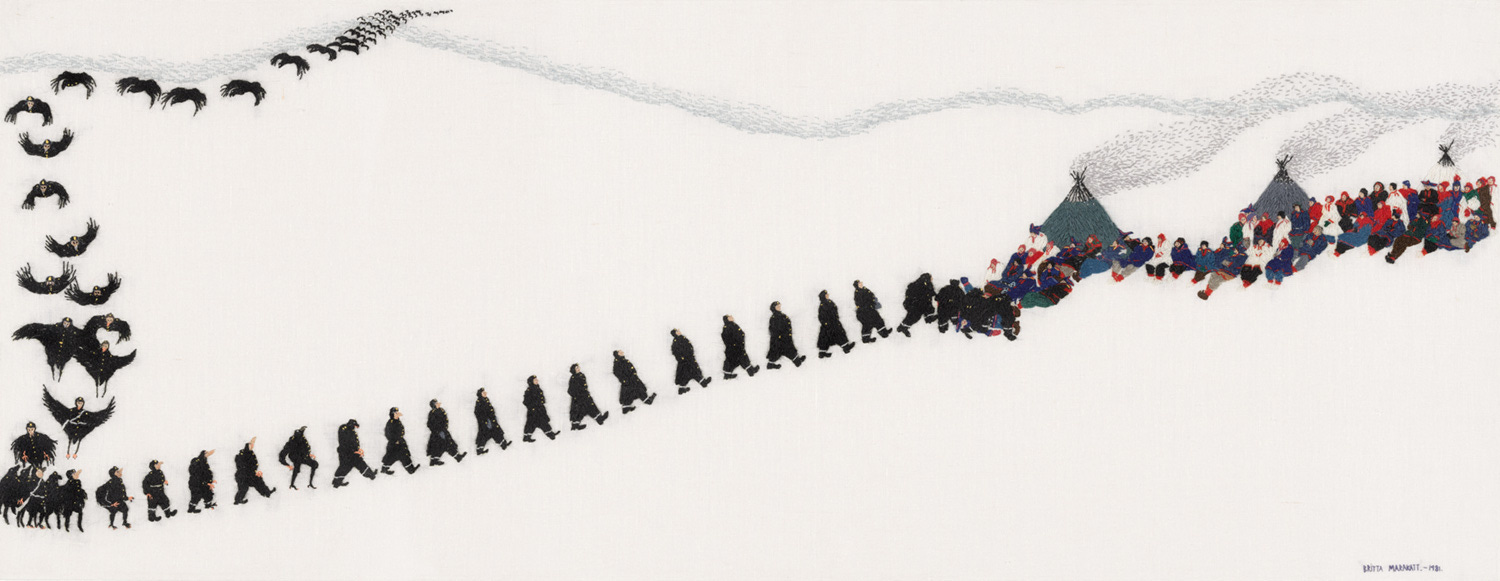
The Crows (1981)
These days Marakatt-Labba, now 73, is concerned with climate change, which she prefers to call “climate catastrophe,” arguing we have long moved past the innocuous concept of “change.” She’s also preoccupied with the Sámi land being polluted and over-prospected as miners remove graphite and cobalt. Her latest work is inspiring a new generation who is fighting on behalf of the environment and for the protection of Sámi rights.
One of the thrills of travel is being introduced to cultures and to artists, whom I believe are our official cultural spokespersons. As a new fan of Marakatt-Labba, I will continue to seek out her tiny, delicate stitches that so powerfully capture memories, stories and struggle.
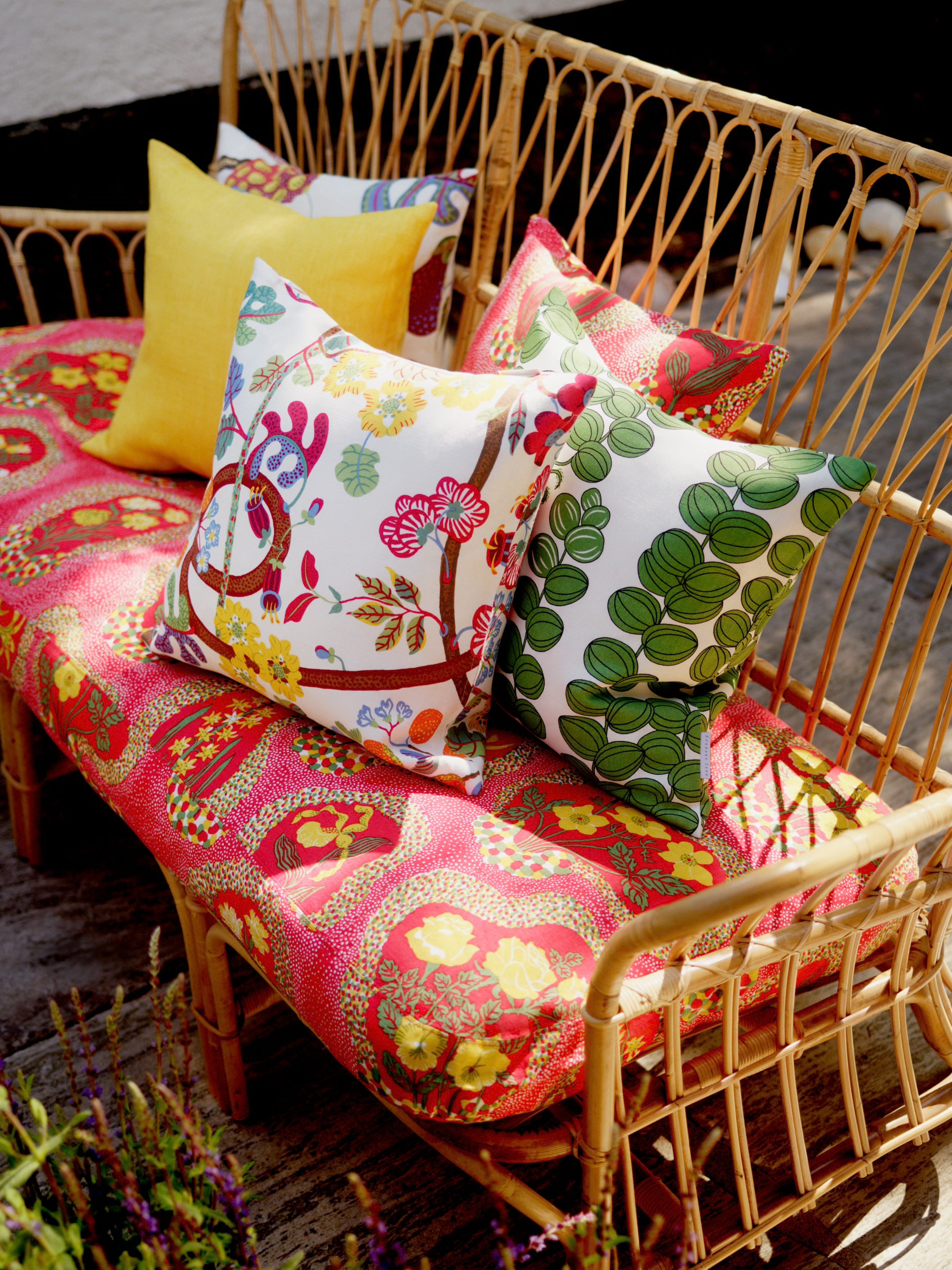
Nothing austere here
The story of another Swedish woman made a strong impression on me in Stockholm. I had made a note in our “definitely not an itinerary” document to visit the Swedish design mecca Svenskt Tenn. The company is beloved in Sweden for its bold, colorful prints, which adorn the best decorated homes as furniture, drapes, wallpaper, upholstery, table linens and artwork. Their designs are not what an American typically thinks of when we picture minimal Scandinavian style. Nevertheless, Svenskt Tenn’s iconic showroom on Strandvägen in Stockholm is a must-visit. There, I was lucky enough to meet the lovely Eva-Marie Adolfson, who told me all about the company’s fascinating history and enduring aesthetic.

Dream team: Ericson and Frank
Estrid Ericson (1894-1981) was 30 years old when she founded Firma Svenskt-Tenn in 1924. She wanted to make contemporary pewter art available to a broader public. Using an inheritance from her late father, Ericson scouted out promising young designers and produced pewter pieces for the home. In 1927, Ericson relocated Svenskt Tenn to its current address (moving into a residential apartment in the same building) and expanded the brand to include furniture, home decor and textiles. In addition to running the business and seeking out new collaborations, she continued to create her own new designs. By the 1930s, it was clear the influential Ericson was in a league of her own. She urged Swedes to move past old rules and “cherish freedom” in their homes, blending treasured heirlooms with contemporary pieces. She eventually became one of the most notable figures in the European design scene of the 20th century.
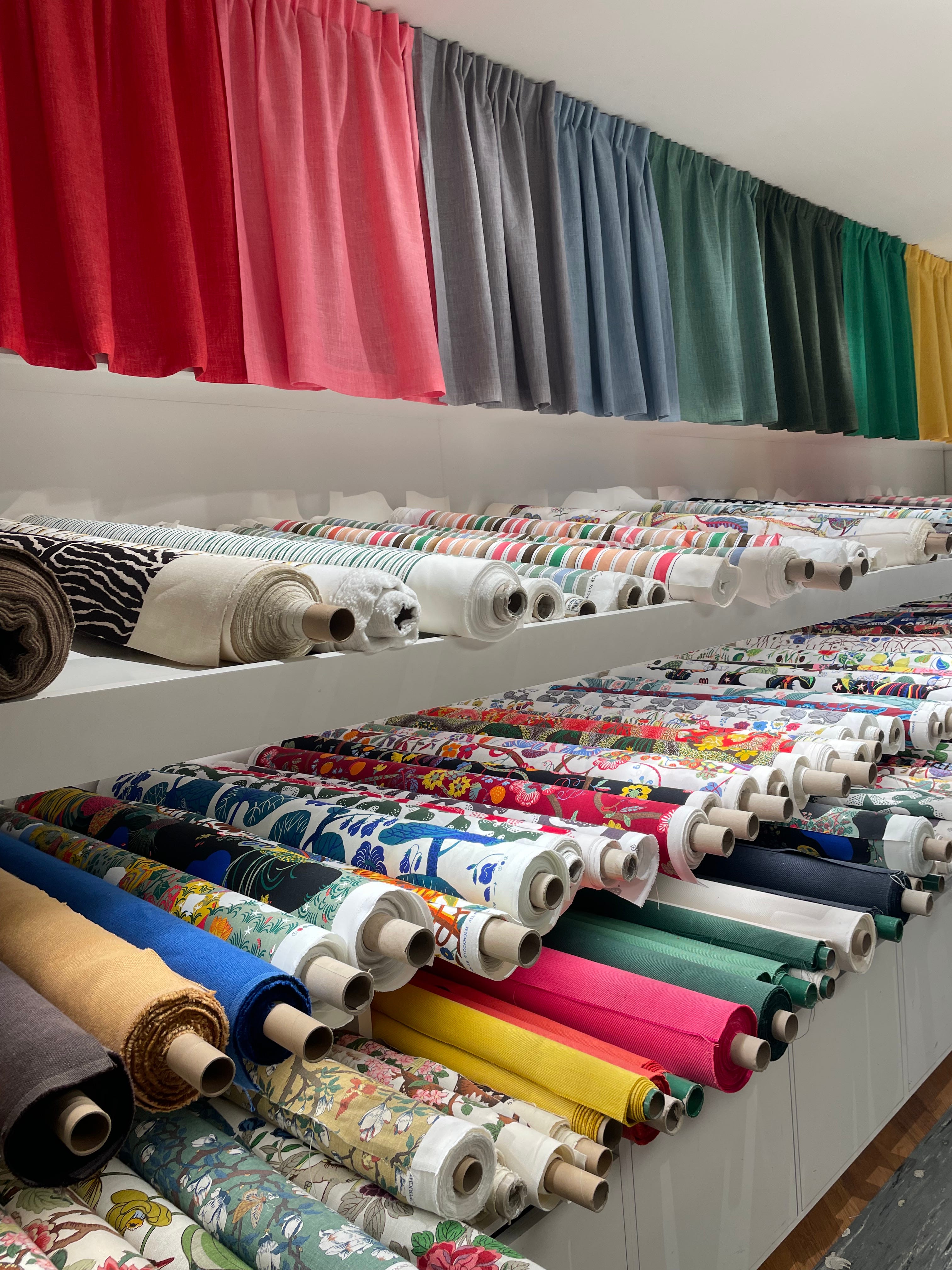
Customization is encouraged at Svenskt Tenn
It’s impossible to tell the story of Svenskt Tenn without mentioning Josef Frank. Frank was a well known architect and designer when he left Austria due to rising antisemitism in 1932. Ericson offered him a creative sanctuary in Stockholm and began to work with him exclusively to create furniture and prints. Frank’s ideas about comfort and color transformed the look of the once austere Svenskt Tenn designs to the vibrant look we see today. Frank would again seek refuge— this time in New York City— during WWII. He later returned to Sweden to continue his collaboration with Ericson. Adolfson told me that Frank’s contribution to Svenskt Tenn and to Swedish design cannot be underestimated. Indeed, today eighty percent of the brand’s line consists of products of its own design, and many of Frank’s 2000 furniture sketches and 160 textile designs are among those products.
Today Svenskt Tenn is owned by the Kjell and Märta Beijer Foundation, and remarkably all profits are donated to research in areas such as the preservation of Swedish design, environmental sustainability, genetics, biomedicine and pharmaceuticals. Innovative design and an inspiring business model? Sounds like a winning combination to me.

That other American duchess
Quick Hits
I’m looking forward to seeing Joan Collins and Isabella Rossellini in the upcoming film The Bitter End. It’s not about a bar in the British Virgin Islands but rather the final years of Wallis Simpson (Collins). The biopic will explore how Simpson’s attorney Suzanne Blum (Rossellini) ruthlessly gained control over her life, as the wife of the late Duke of Windsor succumbed to dementia. No release date has been announced.
Fashion designer Stella McCartney has a collaboration with Avaline, the celebrity-owned organic wine company. The classic French rosé comes in a limited edition bottle designed by McCartney and sells for $26. Go ahead and put yourself on the waitlist; it’s currently sold out.
Vogue Australia says the bandana is back. You heard it here first, friends.
Costco is getting on board with the two-tiered shopping system trend. The big box store announced recently it will be opening an hour early Fridays-Sundays, but only for its executive members. I wonder if this will improve the dire parking experience and tedious long check-out queues. But perhaps the real question is will they offer “toothpick snacks” as my children when they were little called the Costco samples?
Xoxo Emily