

Current Obsessions
May 16, 2026
Let me say something that needs to be said: “bless your heart” does not mean what you think it means. Or rather, it doesn’t only mean what you think it means, and I fear the confusion is starting to cause problems.
For those who didn’t grow up in the American South and may not have encountered the handy phrase, let me offer a little background. The secret, passed gleefully from person to person, was this: when a Southerner says “bless your heart,” they are not blessing anything. They are calling you an idiot. Politely, warmly, with a sweet smile, but make no mistake. For example, “John thinks everyone is impressed by his gaudy new car. Bless his heart.” Translation: John is a fool, and we all know it, and we are too well-mannered to say so directly. For generations, this nuance served the South beautifully. You could say the unsayable, as long as you said it nicely.
But the cat is out of the bag. The phrase has gone national— and, I fear, it has lost something essential: its range.
Here is what non-Southerners, and increasingly even Southerners who should know better, seem to have forgotten. “Bless your heart” is not a one-trick pony. It contains multitudes. Said softly, with a hand on someone’s arm, it conveys genuine sympathy. “She lost her mother when she was only ten years old, bless her heart.” No irony there. And when said with a sort of rueful fondness, it signifies affectionate exasperation. “My poor mother, bless her heart, is completely in over her head planning my wedding.” The love is real, and so is the gentle eye-roll. Now, said flatly, with pursed lips… then you’re in trouble.
Context, tone and inflection are everything. A phrase that can convey sympathy, indulgence, and withering contempt depending on delivery is a remarkable linguistic tool. But I’m concerned that we are forcing it into a single meaning.
Recently, after a parents association meeting at school, I was chatting with some of the moms whom I don’t know well. When one mom complained that her daughter was struggling with a pile of make-up work due to a brief absence, I tried to express my sympathy. “Oh, bless her heart,” I said. But the mom and another woman stared uncomfortably at me, thinking, I assume, that I was making fun of the poor girl.
The incident made me think of an interview that Jennifer Garner gave Vanity Fair in 2016. When asked about ex-husband Ben Affleck's large phoenix back tattoo, Garner, a George, Texas native replied, "You know what we would say in my hometown about that?" she said. "Bless his heart." No elaboration needed; we understood perfectly. But notice what she did not say: she did not say he was ridiculous, or vain or going through something. She didn't have to. The phrase did all the work and left just enough room for kindness to coexist with the joke.
That is the genius of bless your heart, and that is precisely what I’m concerned that we are throwing away. So consider this my public service announcement. The next time someone you love does something endearingly misguided, or tells you about a genuine heartbreak, or muddles through something they were never quite equipped for — reach for the full phrase. Let it do what it was always meant to do. It's too good a phrase to be hijacked by one meaning.
Here’s what else I’m Currently Obsessed with
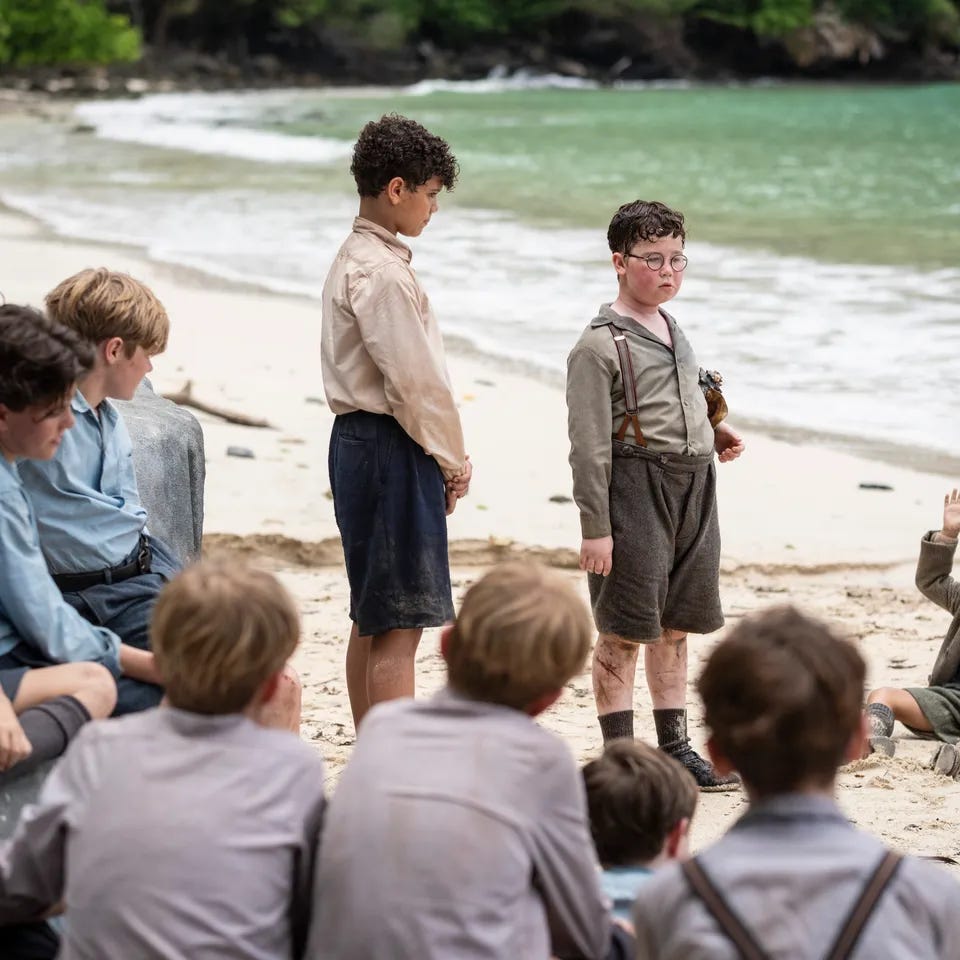
My family is completely obsessed with Netflix’s new limited series Lord of the Flies. William Golding’s 1954 novel has never felt more timely. If you need a reminder of what happens when boys are left to their own devices without the structures of civilization to contain them, this stunning four-episode adaptation, co-produced by the BBC and Australia’s Stan, will provide it. This is a faithful and appropriately dark retelling of the classic story.
The show follows a group of British schoolboys whose plane crashes into a remote, deserted island during World War II. With no adults and no rules, they attempt to govern themselves and fail catastrophically. The descent from order into savagery is just as wrenching here as it is on the page. Writer Jack Thorne, who gave us the Emmy Award-winning Adolescence, is true to the source material (with one small, merciful departure— a character who meets his fate earlier in the novel lingers a little longer here).
The series opens like a distant cousin of that 2000’s classic T.V. series Lost— a crash survivor, filmed from above, wakes up alone, and makes his way through dense jungle. This is our introduction to Piggy, rosy-cheeked with a maturity beyond his years, played brilliantly by David McKenna. He wanders until he finds the charismatic Ralph, and the dynamics of Golding's story snap into place.
Thorne and director Marc Munden have made a show that feels less like prestige television and more like a fever dream. The cinematography is breathtaking and deliberately disorienting. Fisheye lenses, extreme close-ups, blurred edges, and hallucinogenic shifts in perspective give the series a heightened, unstable quality that mirrors the boys’ unraveling grip on reality. The production used infrared cameras to shoot day-for-night scenes— a technique that renders the jungle’s foliage in eerie shades of pink and red, making the island both beautiful and menacing. The series was shot on location in the Langkawi archipelago in northwestern Malaysia. Munden described the shoot’s challenging conditions recently to Condé Nast Traveler: impenetrable rainforest, extreme humidity, everyone soaking wet every day from seawater, rain, or sweat. Covered in mud while swatting away insects and fighting back tears, these boys look genuinely lost.
The score draws on the talents of Hans Zimmer and Cristóbal Tapia de Veer— the latter best known for his work on The White Lotus— and weaves original compositions with choral works by Benjamin Britten and Dmitri Shostakovich. Like the cinematography and editing, the music is stylized and unsettling. (Think Tár, not Percy Jackson.)
The performances are remarkable across the board, but I am already predicting Emmy nominations for Lox Pratt as the power-hungry Jack and McKenna as the lovable, asthmatic Piggy. Both actors have a dramatic range that surpasses their experience. In fact, most of the cast— some of whom are as young as six-years-old— are newcomers to film and television.
A note for parents: this is not a series for young children, but for tweens who are mature enough to sit with difficult material, it is an invaluable watch and a remarkable conversation starter about power, mob mentality and what civilization requires of us. Given the current moment, those conversations feel more necessary than ever.
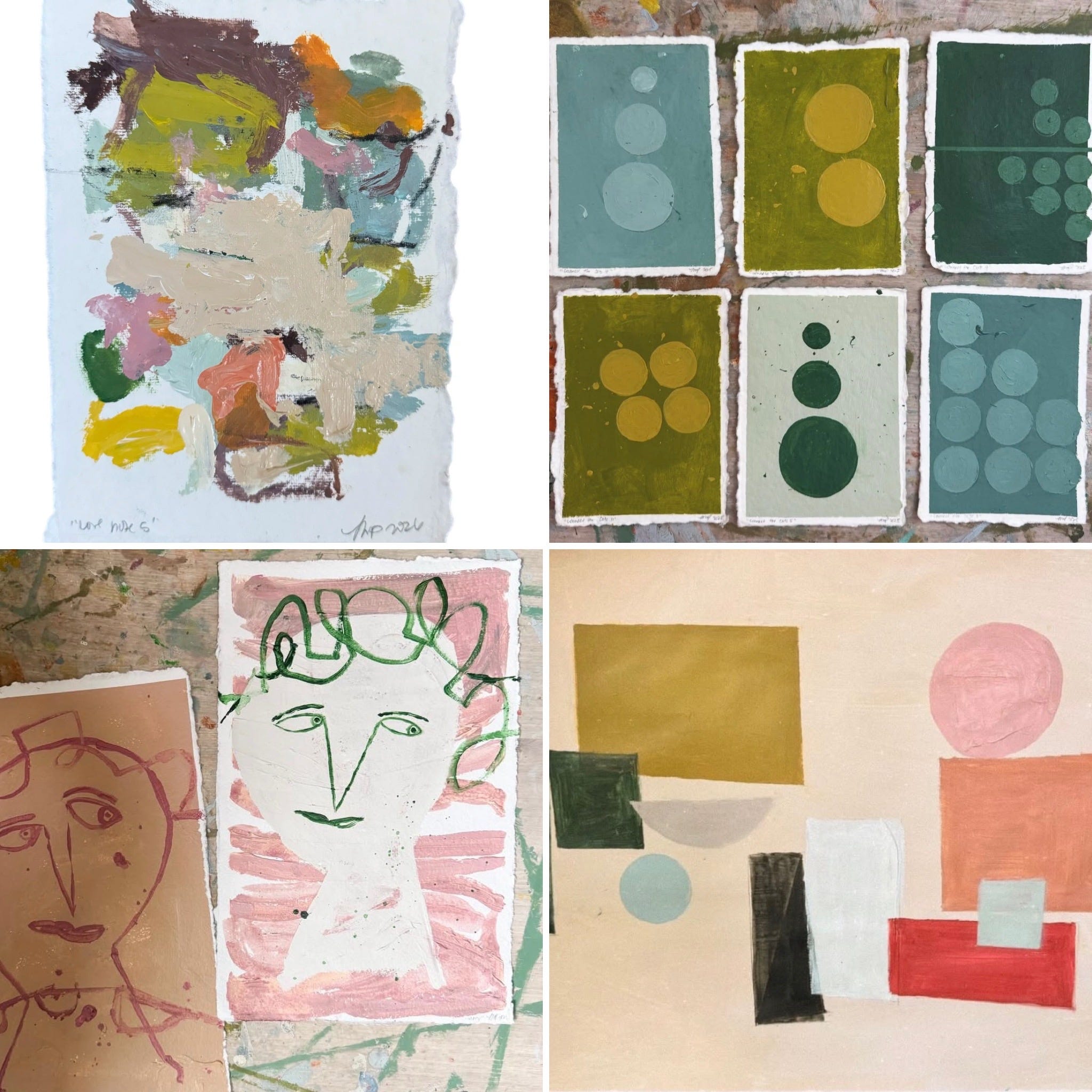
I love nothing more than introducing my readers to artists whose work they may not have come across, and Jennifer Pino is one of my favorites. The Raleigh-based abstract painter is a friend, and I am a genuine admirer of her work.
Based in Raleigh since 2007, Pino has been painting since high school, but never saw her hobby as a path to a living. After graduating from Elon University, she worked in television production, communication and later graphic design. When her job at a PR/tech firm was eliminated while she was on maternity leave, Pino picked up her paintbrushes and figured she could at least make art for her home. Friends admired the abstract canvases she hung on her walls and were soon asking for her to make pieces for them. Sales came via word of mouth until her business took off in 2013, just as Instagram was hitting its stride. Back then, Pino told me, the app wasn’t cluttered with ads and the algorithm favored small businesses and artists who posted regularly. By 2016, she was able to pivot to painting full time.
Pino is drawn to color, shape and movement. Painting in acrylics, she says her pieces begin with a single, deliberate mark, which may even be leftover paint from another project. She then layers paint, lots of layers, onto the canvas. She often steps away for a few days to ruminate on color and proportion before returning. “You may see a sliver of that original mark (in the finished piece),” she told me.
Pino may change direction entirely midway through a project. “I cover stuff up all the time. I have some pieces with eight paintings underneath them. It’s a lot of trial and error.” She works on wood, paper and canvas. The paper pieces often serve as workshops for larger, more time-consuming works on canvas. Each piece takes several weeks to complete, and Pino typically works on several paintings at once.
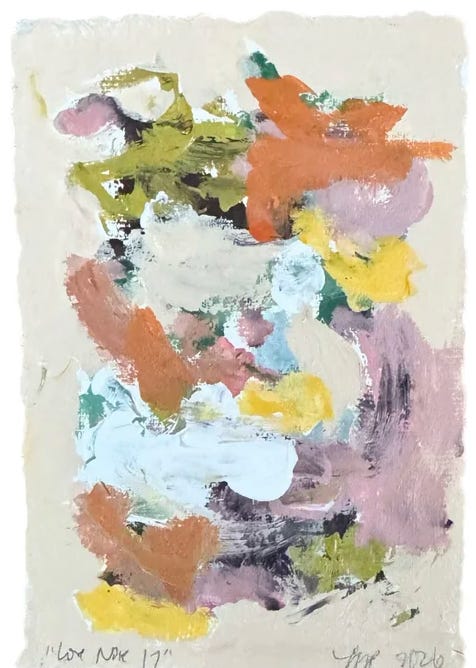
She prefers to release small, affordable collections, such as her recent Love Notes, inspired by the TV series Love Story, about the romance between Carolyn Bessette and John F. Kennedy Jr. These pieces on paper— which start at $55— are Pino’s love notes to a more ambitious series she’s producing on canvas.
“I like making art that’s accessible. It makes me sad when I can’t afford an artist that I admire.” Pino has never made prints and says she never will. “I want to do something that no one else has. No art should be exactly the same.”
Pino works frequently with interior designers, who come to her with a specific client’s needs in mind, and she’s happy to work within those parameters of size and color. She is represented by several galleries along the East Coast and was recently featured in a collection by the luxury design brand Serena and Lily. If you are interested in a commission of your own, Pino explains her process here, and be sure to follow her on Instagram at jenniferpinopaints.
Quick Hits
If you haven’t already seen the popular BBC documentary David Attenborough's 100 Years on Planet Earth, it’s definitely worth a watch— if for nothing else than to see a young Sir David frolicking with gorillas on the Rwandan-Congolese border. In the U.S., you can find the 90-minute special here on PBS; it’s also available here on the BBC. I trekked to see these same gorillas in 2000, and I can assure you we did not play on the ground together. Attenborough’s experience with a family of primates is unbelievable.
My fascination with Bunny Mellon runs deep, and if I were going to be in Northern Virginia this summer, I would visit her breathtaking Oak Spring Garden, which is not typically not open to the public, on June 26 and 26 for a self-guided tour the garden and gallery.
Hathaway Hutton has done it again. Designer Jen Risk debuted her irresistible Jerry Clutch last week, and it immediately sold out, but if you’re quick, you can pre-order one of the chic, upcycled boat totes here. Her Birdie Fair totes, which went viral after a feature in the New York Times, have spawned a lot of imitators, but trust me, you want the real deal.
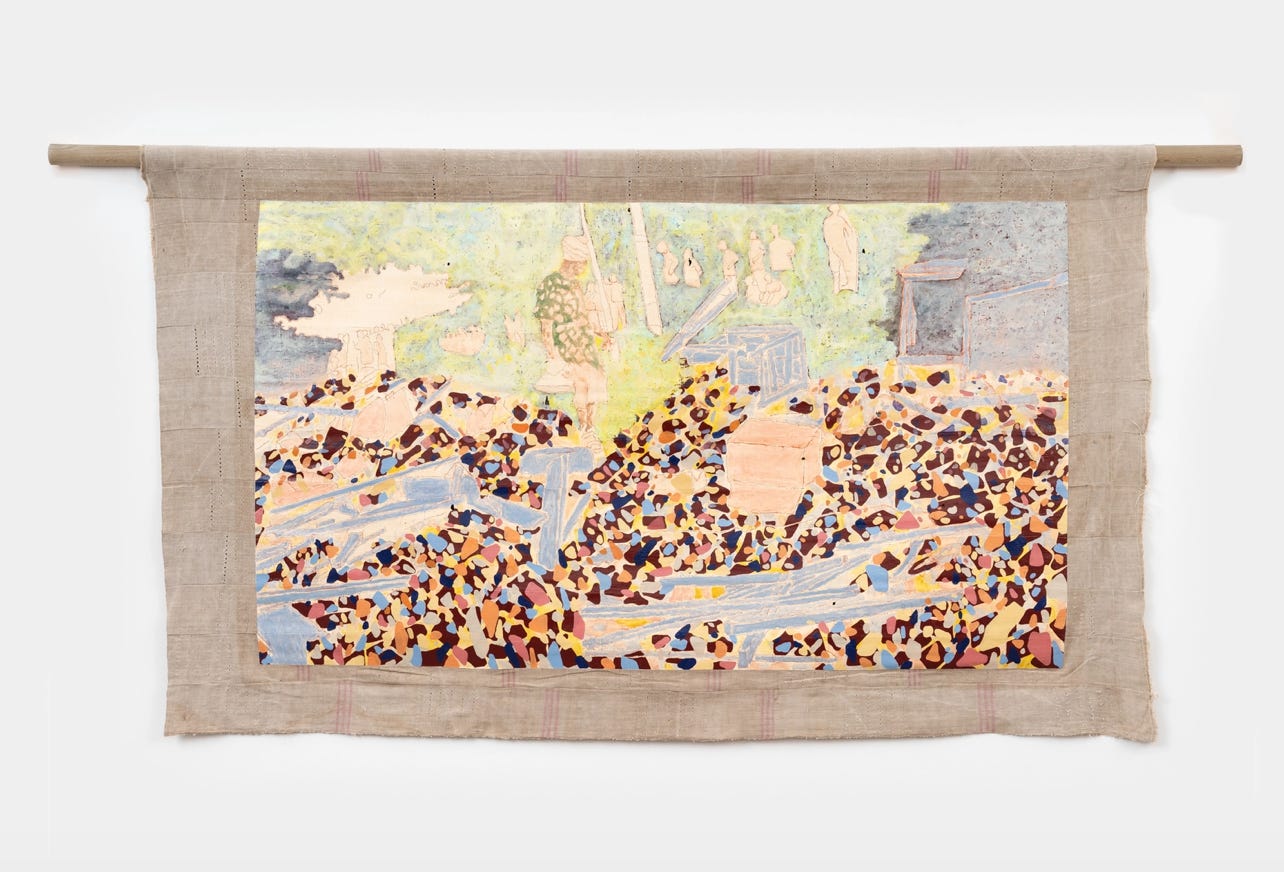
Nengi Omuku: The Gathering opens at the de Young in San Francisco on June 27. In her first U.S. solo museum exhibition, the celebrated Nigerian painter creates dreamlike scenes that depict better lives for Nigerians on traditional sanyan cloth, a historic Yoruba textile once worn for important ceremonies. Her subjects live in lush, tranquil environments far from the chaotic, fast-paced life of Lagos.
Marcel DuChamp at MOMA runs through August 22. It’s the first major show of the French avant-garde artist in the United States since 1973 and showcases 300 works. It is co-organized with the Philadelphia Art Museum, where it will be on view from October 10, 2026, through January 31, 2027. You can also catch a version of the exhibit in Paris next spring at the Grand Palais.
My post-workout recovery these days consists of this great heating pad, a solid foam roller and the Epsom-It Soothing Muscle Lotion. I also toss the fragrance-free cream in my son’s fencing bag to use after his foil lessons. If you’re a fan of Epsom salt baths for aches and pains, I think you’ll like this quick and easy remedy.
Xoxo, Emily